When Asking for Help Feels Harder Than Just Handling It Yourself
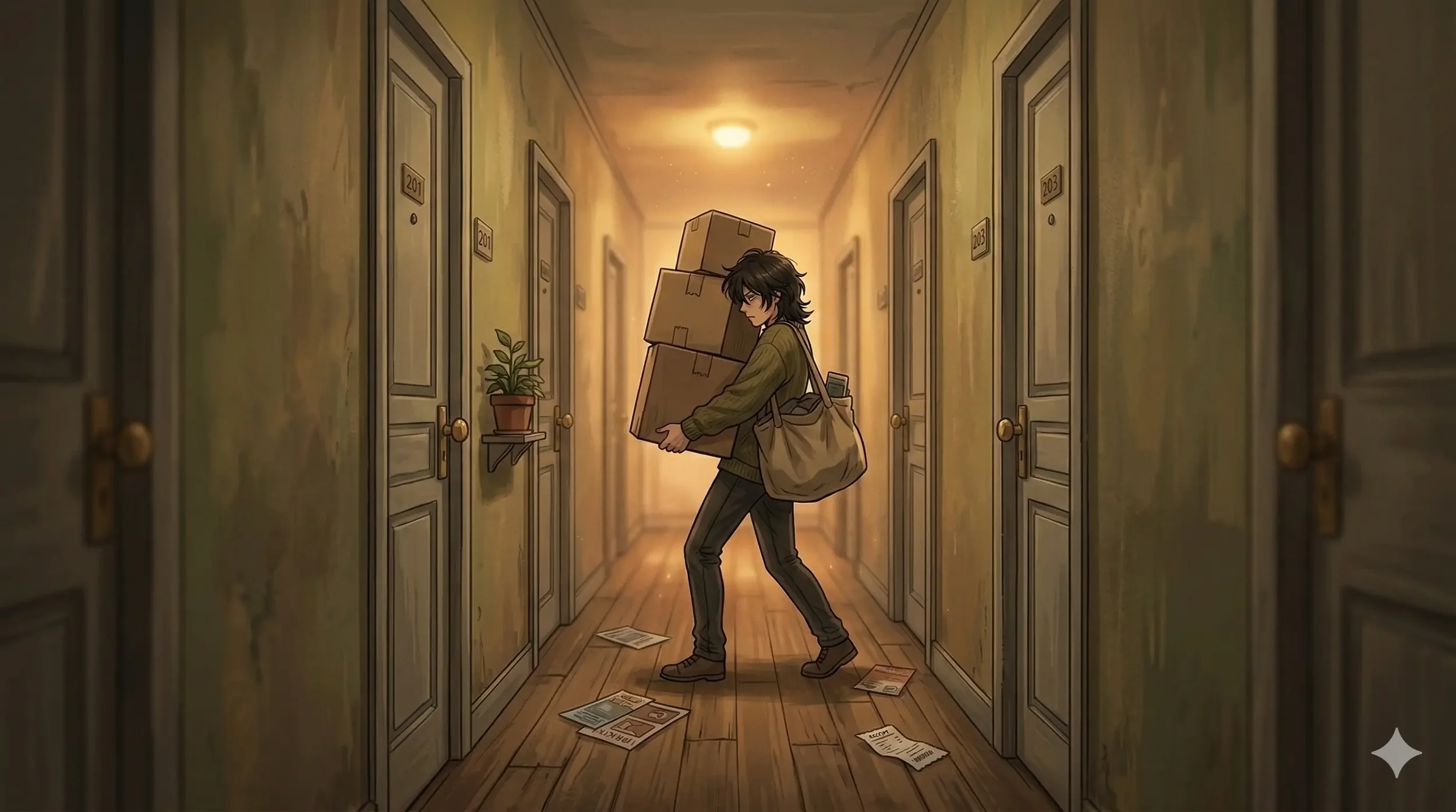
For the people who have always figured it out alone, and quietly wonder why that still feels so isolating.
There's a kind of person who is very good at managing.
They research, adapt, problem-solve, and get through things. From the outside, they seem capable and sorted. They rarely ask for help, not because they're arrogant, but because asking has never felt quite worth the effort it requires.
Maybe it's easier to just handle it.
Maybe the person they would ask is already stretched.
Maybe the last time they reached out, the response was underwhelming enough to make them decide not to bother again.
Whatever the reason, over time, not asking becomes the default setting. And it works, until the weight of always managing quietly starts to press down.
The small moments that taught you not to ask
Most people who struggle to ask for help didn't arrive there randomly.
There were usually early lessons, small and specific, that told them asking wasn't particularly safe or useful:
The parent who was always tired, distracted, or dealing with "something more important."
The time they opened up about something and were met with unsolicited advice, minimisation, or a topic change.
The friend who asked "are you okay?" but clearly needed the answer to be yes.
The group dynamic where being the composed one meant no one looked at them too closely.
None of these moments were necessarily dramatic.
But they were consistent enough to shape a quiet conclusion: other people's attention is unreliable, and depending on it costs more than it gives.
So you learnt to hold your own things. Efficiently. Without making it visible.
The difference between independence and isolation
There is a version of self-reliance that genuinely feels good - solving something yourself, building capability, knowing you can manage under pressure.
And there is another version that looks the same from the outside but feels very different on the inside: the kind where you're not self-reliant by preference, but because the alternative has consistently felt worse.
You might recognise the second version here:
You start solving problems before you've fully acknowledged how hard the situation is.
You tell people you're "fine" or "sorting it out," not because it's true, but because the longer explanation would require more emotional energy than it would return.
You feel faintly resentful when people assume you're coping, because they're usually right, but only because you've worked hard to make it look that way.
You find it genuinely difficult to name what you need from someone, even when you know you need something.
This isn't strength. It's adaptation. And it carries a cost that doesn't always show up in the obvious places.
What asking for help actually requires
People often assume that the barrier to asking for help is pride.
Sometimes it is. But more often, it's something more practical: not knowing whether this person can actually hold what you're about to hand them.
Asking for help in a meaningful way isn't just saying the words.
It requires trusting that the other person will:
Stay with what you're sharing rather than jumping to fix, judge, or redirect it.
Not need you to minimise what you're going through so they feel more comfortable.
Remain reliably available, not just in the moment of sharing, but after.
Hold what you've said without it changing how they see you.
For many people, there isn't a reliable person in their life who can do all of that.
Not because they're surrounded by bad people, but because most people simply haven't had the space, training, or capacity to offer that kind of consistent, patient attention.
So the gap isn't always "I can't ask." It's "I don't have somewhere safe to ask to."
When coping becomes the whole personality
After years of handling things quietly, self-sufficiency can start to feel like an identity rather than a strategy.
You might be praised for it. Called strong, capable, low-maintenance. People around you may rely on the fact that you manage, and that reliance can quietly trap you, because stepping away from it means letting people down, or revealing something they weren't prepared for.
There's also a loneliness specific to this position that rarely gets named: the loneliness of not being allowed to struggle in public, because too many people have come to depend on your composure.
And so the asking doesn't happen.
Not because you don't want it to. Because there's no obvious space where it would land well.
If this is where you are
If asking for help has always felt harder than it should, and you've built a quiet life around managing alone, that doesn't mean you've failed to connect.
It means you've been practical about where it's safe to put weight.
Wanting a space where you don't have to manage how you come across, where you can say "I don't know how to talk about this, but I need to say it out loud to someone" - is not weakness. It's a very reasonable need that a lot of capable, self-sufficient adults carry silently.
Unburdora is a one-to-one, non-clinical space for adults who want a real, steady person to talk to, without the pressure of maintaining a certain image, managing someone else's reaction, or justifying why what they're carrying matters.
You don't need to arrive with a clear agenda or a tidy version of what's happening.
You can simply start from something like: "I've never been good at asking for help, and I think I've been handling too much alone for too long."
That's enough.